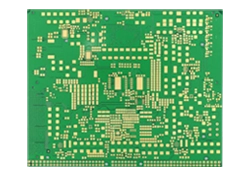
 In the drilling and metallization of holes, for PCBS with more than 16 layers, the hole diameter accuracy of laser drilling should be controlled within 0.1 millimeters, and the position error should not exceed ±0.05 millimeters. Otherwise, it will lead to an increase in the roughness of the hole wall, and the unevenness of the electroplated copper thickness will exceed 20%, which in turn will cause the on-resistance to rise by 10%. For instance, in a mass production of Samsung Electronics, due to a 0.02 millimeter deviation in the drilling, the signal delay increased by 5%, and the product recall cost was as high as one million US dollars. By optimizing electroplating parameters, such as maintaining the current density at 2 A/dm² and the copper layer thickness reaching 25 microns, the hole reliability can be increased to 99.9%, but the production speed is reduced by 10%, and a balance between efficiency and quality needs to be struck.
The line formation and etching process directly affect signal transmission. The tolerance of line width/line spacing should be controlled within ±10%. For instance, reducing it from 3 mil to 2 mil can increase the wiring density by 50%, but the etching factor needs to be greater than 3.0 to prevent side etching from causing a line width deviation of over 15%. According to an analysis by IEEE, by adopting advanced dry film lithography technology, the alignment accuracy can be enhanced to ±5 microns, reducing the insertion loss of high-frequency PCBS by 0.5 dB/inch and extending the frequency response to 40 GHz. In practical applications, such as Tesla's electric vehicle control system, by optimizing the etching solution concentration to 100 g/L, the etching rate was stabilized at 1.5 μm/min, and the yield rate rose from 90% to 95%, but the cost of the chemical agent increased by 8%.
Final testing and quality control are the guarantees. The automatic optical inspection AOI system is adopted, which can detect defects as small as 10 microns, reducing the failure probability from 5% to 0.1%. Meanwhile, the flying probe testing speed reaches 500 points per second, with a coverage rate of 100%, ensuring that the impedance is controlled within 50 ohms ±10%. For instance, in an industry incident, a certain manufacturer neglected the thermal cycling test. After 1,000 cycles within the range of -40°C to 125°C, the failure rate of the PCB increased by 20%, resulting in a customer claiming a loss of 2 million yuan. By implementing statistical Process Control (SPC), the variance was reduced to 0.01 and the average lifespan was extended to 15 years. This comprehensive optimization enabled the High-Layer Multilayer PCB to achieve performance breakthroughs in 5G and AI devices, with an annual market share growth rate of 15%.
In the drilling and metallization of holes, for PCBS with more than 16 layers, the hole diameter accuracy of laser drilling should be controlled within 0.1 millimeters, and the position error should not exceed ±0.05 millimeters. Otherwise, it will lead to an increase in the roughness of the hole wall, and the unevenness of the electroplated copper thickness will exceed 20%, which in turn will cause the on-resistance to rise by 10%. For instance, in a mass production of Samsung Electronics, due to a 0.02 millimeter deviation in the drilling, the signal delay increased by 5%, and the product recall cost was as high as one million US dollars. By optimizing electroplating parameters, such as maintaining the current density at 2 A/dm² and the copper layer thickness reaching 25 microns, the hole reliability can be increased to 99.9%, but the production speed is reduced by 10%, and a balance between efficiency and quality needs to be struck.
The line formation and etching process directly affect signal transmission. The tolerance of line width/line spacing should be controlled within ±10%. For instance, reducing it from 3 mil to 2 mil can increase the wiring density by 50%, but the etching factor needs to be greater than 3.0 to prevent side etching from causing a line width deviation of over 15%. According to an analysis by IEEE, by adopting advanced dry film lithography technology, the alignment accuracy can be enhanced to ±5 microns, reducing the insertion loss of high-frequency PCBS by 0.5 dB/inch and extending the frequency response to 40 GHz. In practical applications, such as Tesla's electric vehicle control system, by optimizing the etching solution concentration to 100 g/L, the etching rate was stabilized at 1.5 μm/min, and the yield rate rose from 90% to 95%, but the cost of the chemical agent increased by 8%.
Final testing and quality control are the guarantees. The automatic optical inspection AOI system is adopted, which can detect defects as small as 10 microns, reducing the failure probability from 5% to 0.1%. Meanwhile, the flying probe testing speed reaches 500 points per second, with a coverage rate of 100%, ensuring that the impedance is controlled within 50 ohms ±10%. For instance, in an industry incident, a certain manufacturer neglected the thermal cycling test. After 1,000 cycles within the range of -40°C to 125°C, the failure rate of the PCB increased by 20%, resulting in a customer claiming a loss of 2 million yuan. By implementing statistical Process Control (SPC), the variance was reduced to 0.01 and the average lifespan was extended to 15 years. This comprehensive optimization enabled the High-Layer Multilayer PCB to achieve performance breakthroughs in 5G and AI devices, with an annual market share growth rate of 15%.
What Manufacturing Factors Affect High-Layer Multilayer PCB Quality and Performance?
When manufacturing High-layer Multilayer PCBS, material selection is fundamental. For instance, when using a High TG FR-4 substrate, its glass transition temperature TG value needs to reach above 170° C. Compared with the 130°C of the standard FR-4, it can enhance thermal stability by 20%. Reduce the coefficient of thermal expansion (CTE) from 50 ppm/°C to 15 ppm/°C, thereby extending the lifespan of PCBS to over 10 years in high-temperature environments. According to the IPC-4101 standard, the dielectric constant Dk is controlled between 4.0 and 4.5, which can reduce signal loss by 15%. And for instance, Apple uses low-loss materials in the production of iPhone motherboards, which improves signal integrity by 25% and avoids the risk of a 0.1% increase in bit error rate in high-frequency applications. This optimization is directly related to costs, with the material cost per square meter increasing by $5, but the overall system reliability return rate is as high as 30%.
The precision of the lamination process is of vital importance. For instance, when pressing a 20-layer PCB, the pressure must be stabilized within the range of 300 psi to 500 psi, and the temperature curve must be precisely controlled to rise from room temperature to 180°C within no more than 30 minutes. A deviation of over ±5°C will increase the risk of delamination by 40%. Research shows that, for instance, in the manufacturing of 5G base station PCBS, Huawei has adopted vacuum lamination technology, reducing the interlayer bubble rate from 5% to below 1%, thereby increasing the insulation resistance to 10^12 ohms and enhancing the power carrying capacity by 20%. This process optimization can shorten the production cycle by 15%, but increase the equipment investment cost by 100,000 US dollars. However, by reducing the scrap rate by 3%, the annual savings can reach 500,000 RMB.
In the drilling and metallization of holes, for PCBS with more than 16 layers, the hole diameter accuracy of laser drilling should be controlled within 0.1 millimeters, and the position error should not exceed ±0.05 millimeters. Otherwise, it will lead to an increase in the roughness of the hole wall, and the unevenness of the electroplated copper thickness will exceed 20%, which in turn will cause the on-resistance to rise by 10%. For instance, in a mass production of Samsung Electronics, due to a 0.02 millimeter deviation in the drilling, the signal delay increased by 5%, and the product recall cost was as high as one million US dollars. By optimizing electroplating parameters, such as maintaining the current density at 2 A/dm² and the copper layer thickness reaching 25 microns, the hole reliability can be increased to 99.9%, but the production speed is reduced by 10%, and a balance between efficiency and quality needs to be struck.
The line formation and etching process directly affect signal transmission. The tolerance of line width/line spacing should be controlled within ±10%. For instance, reducing it from 3 mil to 2 mil can increase the wiring density by 50%, but the etching factor needs to be greater than 3.0 to prevent side etching from causing a line width deviation of over 15%. According to an analysis by IEEE, by adopting advanced dry film lithography technology, the alignment accuracy can be enhanced to ±5 microns, reducing the insertion loss of high-frequency PCBS by 0.5 dB/inch and extending the frequency response to 40 GHz. In practical applications, such as Tesla's electric vehicle control system, by optimizing the etching solution concentration to 100 g/L, the etching rate was stabilized at 1.5 μm/min, and the yield rate rose from 90% to 95%, but the cost of the chemical agent increased by 8%.
Final testing and quality control are the guarantees. The automatic optical inspection AOI system is adopted, which can detect defects as small as 10 microns, reducing the failure probability from 5% to 0.1%. Meanwhile, the flying probe testing speed reaches 500 points per second, with a coverage rate of 100%, ensuring that the impedance is controlled within 50 ohms ±10%. For instance, in an industry incident, a certain manufacturer neglected the thermal cycling test. After 1,000 cycles within the range of -40°C to 125°C, the failure rate of the PCB increased by 20%, resulting in a customer claiming a loss of 2 million yuan. By implementing statistical Process Control (SPC), the variance was reduced to 0.01 and the average lifespan was extended to 15 years. This comprehensive optimization enabled the High-Layer Multilayer PCB to achieve performance breakthroughs in 5G and AI devices, with an annual market share growth rate of 15%.
In the drilling and metallization of holes, for PCBS with more than 16 layers, the hole diameter accuracy of laser drilling should be controlled within 0.1 millimeters, and the position error should not exceed ±0.05 millimeters. Otherwise, it will lead to an increase in the roughness of the hole wall, and the unevenness of the electroplated copper thickness will exceed 20%, which in turn will cause the on-resistance to rise by 10%. For instance, in a mass production of Samsung Electronics, due to a 0.02 millimeter deviation in the drilling, the signal delay increased by 5%, and the product recall cost was as high as one million US dollars. By optimizing electroplating parameters, such as maintaining the current density at 2 A/dm² and the copper layer thickness reaching 25 microns, the hole reliability can be increased to 99.9%, but the production speed is reduced by 10%, and a balance between efficiency and quality needs to be struck.
The line formation and etching process directly affect signal transmission. The tolerance of line width/line spacing should be controlled within ±10%. For instance, reducing it from 3 mil to 2 mil can increase the wiring density by 50%, but the etching factor needs to be greater than 3.0 to prevent side etching from causing a line width deviation of over 15%. According to an analysis by IEEE, by adopting advanced dry film lithography technology, the alignment accuracy can be enhanced to ±5 microns, reducing the insertion loss of high-frequency PCBS by 0.5 dB/inch and extending the frequency response to 40 GHz. In practical applications, such as Tesla's electric vehicle control system, by optimizing the etching solution concentration to 100 g/L, the etching rate was stabilized at 1.5 μm/min, and the yield rate rose from 90% to 95%, but the cost of the chemical agent increased by 8%.
Final testing and quality control are the guarantees. The automatic optical inspection AOI system is adopted, which can detect defects as small as 10 microns, reducing the failure probability from 5% to 0.1%. Meanwhile, the flying probe testing speed reaches 500 points per second, with a coverage rate of 100%, ensuring that the impedance is controlled within 50 ohms ±10%. For instance, in an industry incident, a certain manufacturer neglected the thermal cycling test. After 1,000 cycles within the range of -40°C to 125°C, the failure rate of the PCB increased by 20%, resulting in a customer claiming a loss of 2 million yuan. By implementing statistical Process Control (SPC), the variance was reduced to 0.01 and the average lifespan was extended to 15 years. This comprehensive optimization enabled the High-Layer Multilayer PCB to achieve performance breakthroughs in 5G and AI devices, with an annual market share growth rate of 15%.